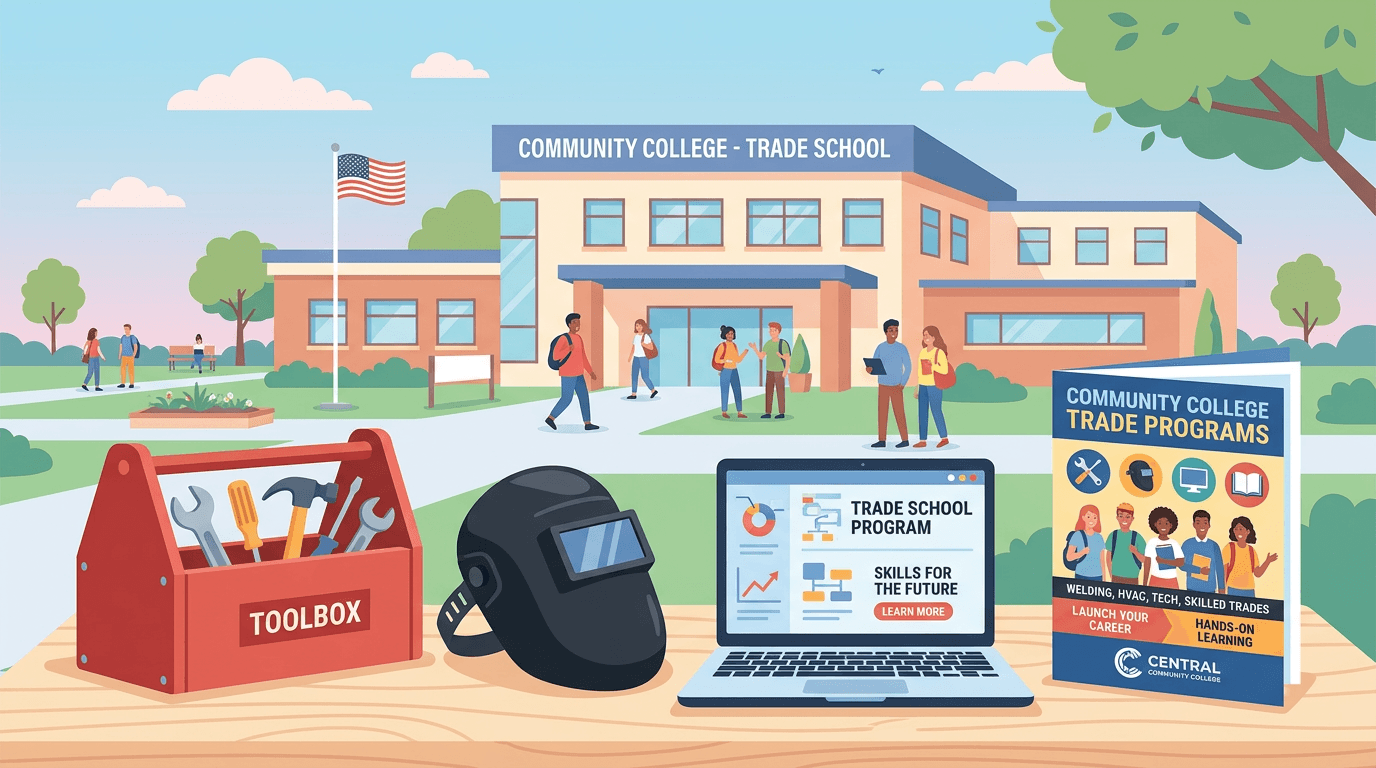
Helping High School Students Explore Career Paths Beyond the Four-Year Degree
Helping High School Students Explore Career Paths Beyond the Four-Year Degree

Article by
Milo
ESL Content Coordinator & Educator
ESL Content Coordinator & Educator
All Posts
High school students weighing their options after graduation often hear about the same handful of four-year degree paths, even though plenty of well-paying careers start with something shorter. Counselors and teachers are usually the first adults who can widen that view, but only if vocational routes are taken as seriously as college.
Still grading everything by hand?
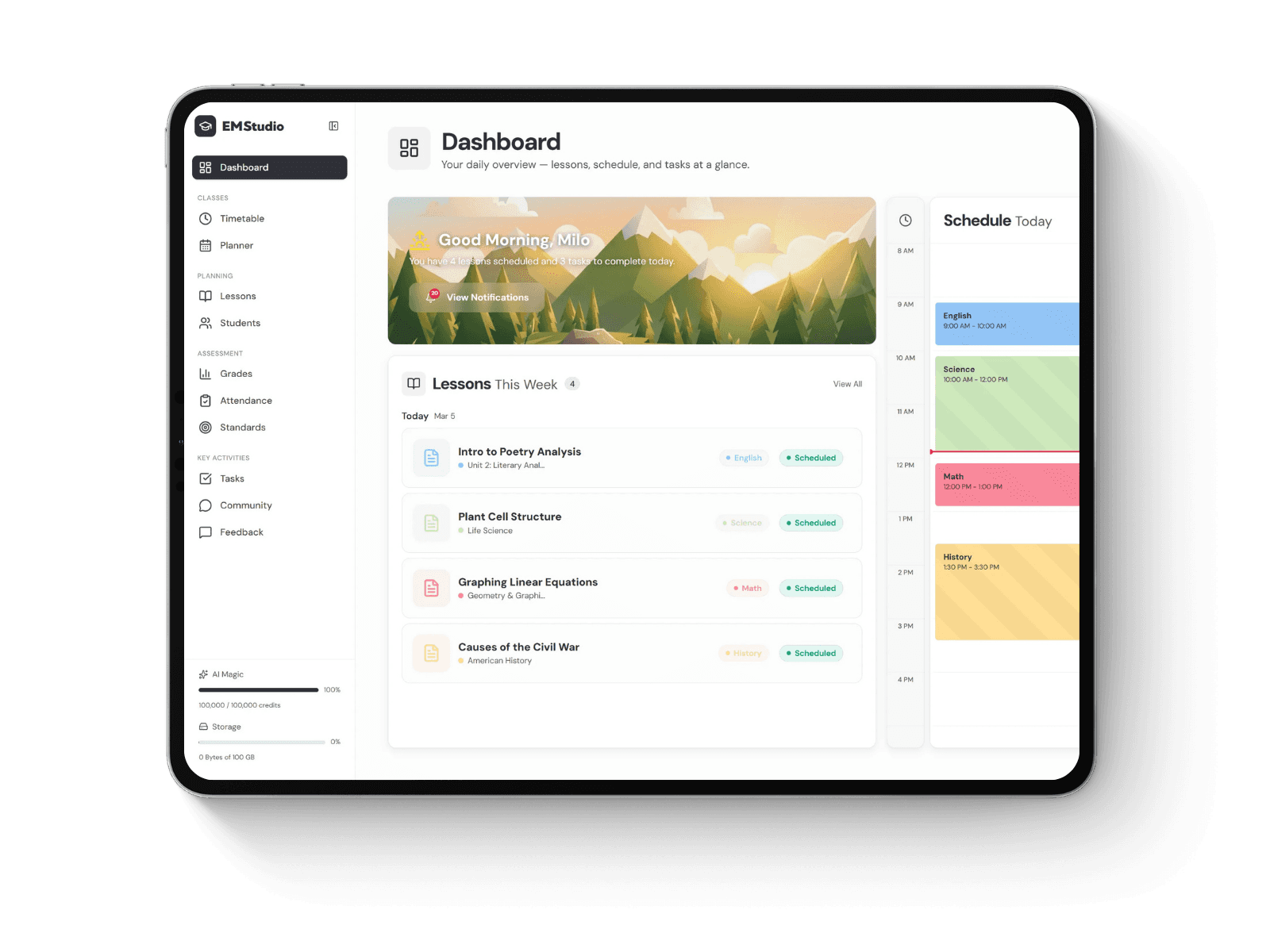
EMStudio is a free teaching management app — manage your classes, students, lessons, and more!
Learn More
Still grading everything by hand?
EMStudio is a free teaching management app — manage your classes, students, lessons, and more!
Learn More
Table of Contents
What the Research Says About Vocational Training
Career and technical education looks very different from the shop-class stereotype many adults remember. Programs now cover fields from healthcare and IT to cosmetology and construction, often with the rigor of a college-prep track. In Massachusetts, outcomes for vocational graduates show students in several career fields enrolling in college more often than peers in traditional programs, with construction students earning noticeably more within seven years of graduating.
How Counselors Can Frame the Conversation Early
Students tend to hear about vocational paths later than they hear about college, often not until junior or senior year when their course schedule is already set. Introducing these options during freshman or sophomore year gives students time to try an elective, shadow a professional, or sit in on an intro class before committing to a track. That early exposure also helps families see these paths as a genuine choice, not a fallback for students who struggle academically.
Vocational Routes Worth Introducing to Students
A short list of options can make skipping a four-year degree feel more concrete for students who are still undecided.
Personal care services: Students interested in beauty and wellness can complete cosmetology classes in Richmond VA that count toward the hours needed for state licensing, combining hands-on styling with skin and nail care.
Skilled trades: Electricians, plumbers, and HVAC technicians train through coursework and paid apprenticeship hours, often finishing with little or no debt.
Healthcare support: Dental hygienists and medical assistants can start with a certificate or associate degree and move into a four-year program later if they choose.
Information technology: Entry-level certifications in networking or cybersecurity can lead directly into a first job, with employers often covering further training.
Building Certification Pathways Into the Classroom
Teachers who want to build career readiness into their own classroom don't need to wait for a formal program to do it. Inviting a local employer or a recent graduate to speak about their field gives students a chance to ask real questions about pay and day-to-day work. Districts that have had success with this often start by mapping certification options to existing course sequences, so a student interested in welding or medical assisting can see which classes lead toward a credential.
Helping Families See the Full Range of Options
Parents often push their kids toward a four-year degree because it's the path they know best, not because they've weighed it against alternatives. Counselors and teachers are often the first adults to walk a family through what a vocational route actually pays and what it opens up down the line. That conversation, started early and backed by real numbers, can be what leads a student to choose the path that actually fits them instead of defaulting to college because it feels safe.
What the Research Says About Vocational Training
Career and technical education looks very different from the shop-class stereotype many adults remember. Programs now cover fields from healthcare and IT to cosmetology and construction, often with the rigor of a college-prep track. In Massachusetts, outcomes for vocational graduates show students in several career fields enrolling in college more often than peers in traditional programs, with construction students earning noticeably more within seven years of graduating.
How Counselors Can Frame the Conversation Early
Students tend to hear about vocational paths later than they hear about college, often not until junior or senior year when their course schedule is already set. Introducing these options during freshman or sophomore year gives students time to try an elective, shadow a professional, or sit in on an intro class before committing to a track. That early exposure also helps families see these paths as a genuine choice, not a fallback for students who struggle academically.
Vocational Routes Worth Introducing to Students
A short list of options can make skipping a four-year degree feel more concrete for students who are still undecided.
Personal care services: Students interested in beauty and wellness can complete cosmetology classes in Richmond VA that count toward the hours needed for state licensing, combining hands-on styling with skin and nail care.
Skilled trades: Electricians, plumbers, and HVAC technicians train through coursework and paid apprenticeship hours, often finishing with little or no debt.
Healthcare support: Dental hygienists and medical assistants can start with a certificate or associate degree and move into a four-year program later if they choose.
Information technology: Entry-level certifications in networking or cybersecurity can lead directly into a first job, with employers often covering further training.
Building Certification Pathways Into the Classroom
Teachers who want to build career readiness into their own classroom don't need to wait for a formal program to do it. Inviting a local employer or a recent graduate to speak about their field gives students a chance to ask real questions about pay and day-to-day work. Districts that have had success with this often start by mapping certification options to existing course sequences, so a student interested in welding or medical assisting can see which classes lead toward a credential.
Helping Families See the Full Range of Options
Parents often push their kids toward a four-year degree because it's the path they know best, not because they've weighed it against alternatives. Counselors and teachers are often the first adults to walk a family through what a vocational route actually pays and what it opens up down the line. That conversation, started early and backed by real numbers, can be what leads a student to choose the path that actually fits them instead of defaulting to college because it feels safe.
Still grading everything by hand?
EMStudio is a free teaching management app — manage your classes, students, lessons, and more!
Learn More
Still grading everything by hand?
EMStudio is a free teaching management app — manage your classes, students, lessons, and more!
Learn More



Notion4Teachers
Notion templates to simplify administrative tasks and enhance your teaching experience.



2026 Notion4Teachers. All Rights Reserved.
Notion4Teachers
Notion templates to simplify administrative tasks and enhance your teaching experience.
2026 Notion4Teachers. All Rights Reserved.
Notion4Teachers
Notion templates to simplify administrative tasks and enhance your teaching experience.
2026 Notion4Teachers. All Rights Reserved.